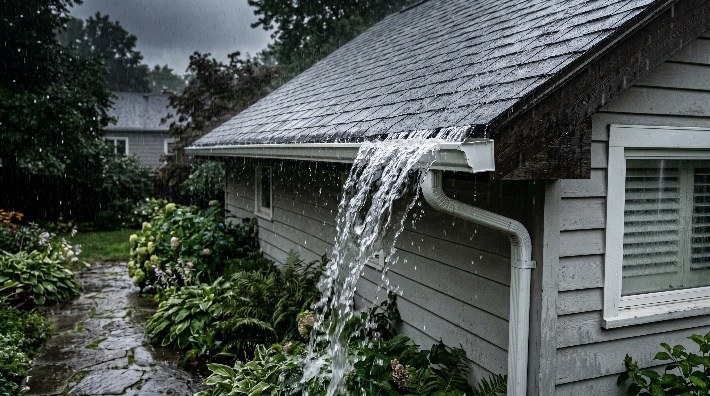
After weeks of heavy rainfall across Edmonton, many homeowners have started noticing things they have not seen before: water pooling beside the house, overflowing gutters, saturated landscaping, or damp spots in the basement.
The question naturally follows:
“Is this normal, or is this the start of a foundation problem?”
In many cases, the answer starts with your gutters.
Most homeowners think of gutters as a roof component. In reality, they are one of the most important parts of your home’s water management system. Their job is simple: collect rainwater from the roof and direct it safely away from the foundation.
When gutters work properly, most homeowners never think about them.
When they fail, water often ends up exactly where you do not want it, right beside your foundation.
Why Gutters Matter More Than Most Homeowners Realize
Every rainfall event deposits a significant amount of water onto your roof. During Edmonton’s wet summer months, that volume can add up quickly.
Your gutter system is designed to control where that water goes.
When gutters become clogged, damaged, disconnected, or improperly sloped, rainwater can overflow and concentrate around the base of your home. Over time, repeated exposure to excess moisture can contribute to:
- Basement leaks
- New foundation cracks
- Worsening existing cracks
- Soil movement and settlement
- Increased repair costs later
The important thing to understand is that many foundation problems begin as drainage problems. We break the connection down further in our guide on how to prevent water from pooling around your foundation.
Water management issues often develop gradually. Homeowners may not notice a problem until they discover moisture in the basement, cracks in foundation walls, or signs of settlement elsewhere in the home.
By then, the original cause may have been months or even years in the making.
Seeing Water Near Your Foundation Doesn’t Automatically Mean You Need Repairs
This is where many homeowners become concerned.
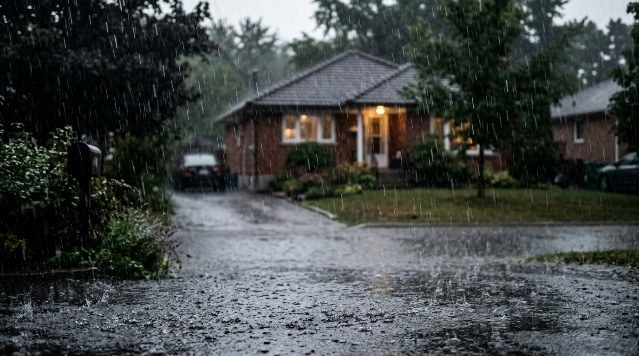
After several weeks of rain, it is common to notice wet soil, small puddles, or areas of standing water around a property. That doesn’t automatically mean your foundation is damaged. Heavy rainfall can temporarily overwhelm even well-functioning drainage systems. What matters is whether the issue is recurring or persistent.
You should pay closer attention if:
- Water repeatedly collects beside the home
- Moisture remains for several days after rainfall
- Gutters consistently overflow during storms
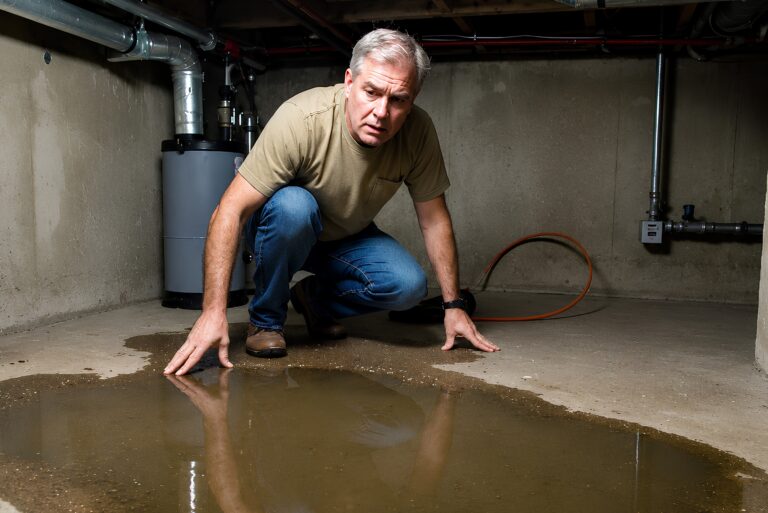
- Basement leaks or dampness begin to appear
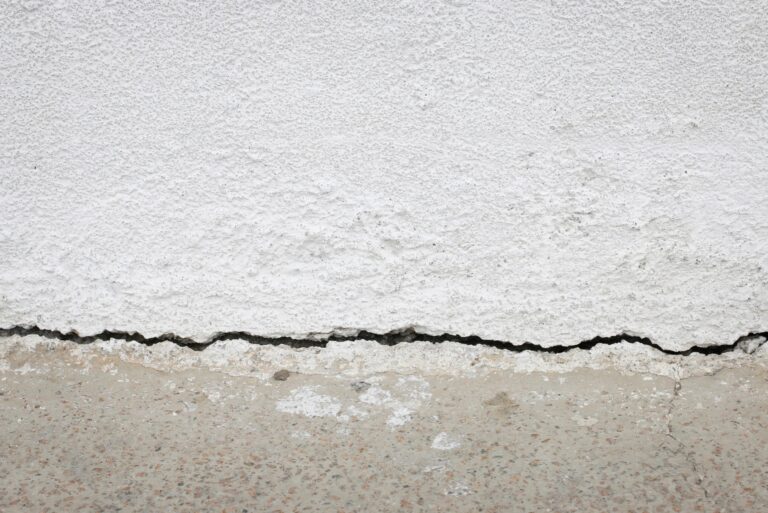
- Existing foundation cracks seem to be changing
Recurring dampness is often the first sign that you may need basement leak repair, and persistent moisture is one of the common causes of basement water intrusion we see in Edmonton homes.
The goal is not to eliminate every puddle after a major storm. The goal is to prevent ongoing water accumulation beside your foundation.
Common Gutter Problems That Lead to Foundation Issues
Many drainage problems originate from relatively simple gutter defects.
Some of the most common include:
Clogged Gutters
Leaves, debris, and sediment can block water flow and cause overflow during heavy rain.
Damaged or Sagging Gutters
Sections that pull away from the home may allow water to spill directly beside the foundation.
Improper Gutter Slope
If water cannot flow efficiently toward downspouts, it may collect and overflow.
Leaking Joints and Connections
Even small leaks can direct a surprising amount of water into the soil surrounding your foundation.
Downspouts That Discharge Too Close to the Home
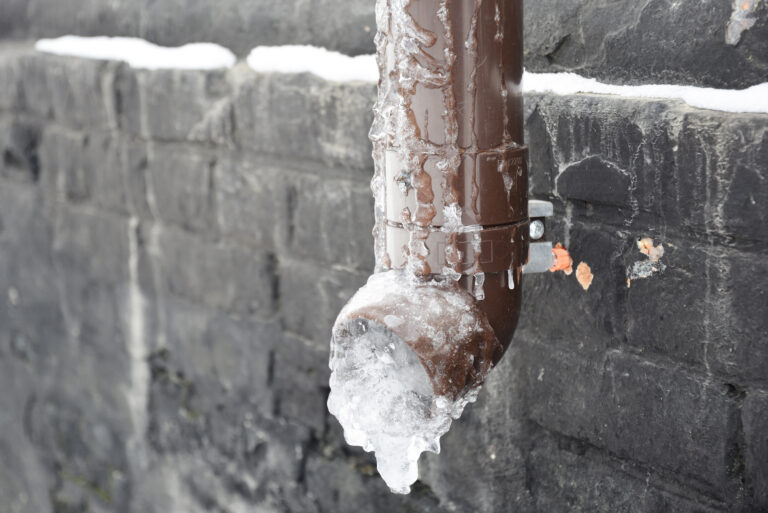
A perfectly functioning gutter system can still contribute to foundation problems if downspouts release water directly beside the house. Extending downspouts or adding proper drainage installation and sump pump systems helps carry that water safely away from the home.
Why This Matters During Edmonton’s Rainy Season
Summer is often when drainage-related foundation concerns become most visible.
After periods of sustained rainfall, surrounding soils become saturated and lose their ability to absorb additional moisture efficiently. As more water accumulates, the risk of drainage-related issues increases. This build-up of hydrostatic pressure is what gradually forces moisture toward your foundation walls. This is often why homeowners first notice symptoms during wet years. The foundation problem may not be new. The weather simply makes an existing drainage weakness easier to see. In many cases, overflowing gutters, poor grading, or inadequate runoff management have been present for years before they become noticeable.

A Simple Inspection Can Prevent Bigger Problems
The good news is that gutter maintenance is one of the most affordable forms of foundation protection available.
A seasonal inspection should include:
- Removing debris and blockages
- Checking for loose or damaged sections
- Confirming proper slope toward downspouts
- Inspecting joints and seams for leaks
- Ensuring downspouts discharge away from the foundation
- Looking for overflow during heavy rainfall
These simple checks can help identify drainage issues before they have an opportunity to affect the foundation below.
Foundation Protection Starts Above Ground
When homeowners think about foundation care, they often think about crack repair, waterproofing systems, or structural inspections. Those services can certainly be important when problems develop. But some of the most effective foundation protection starts much earlier.
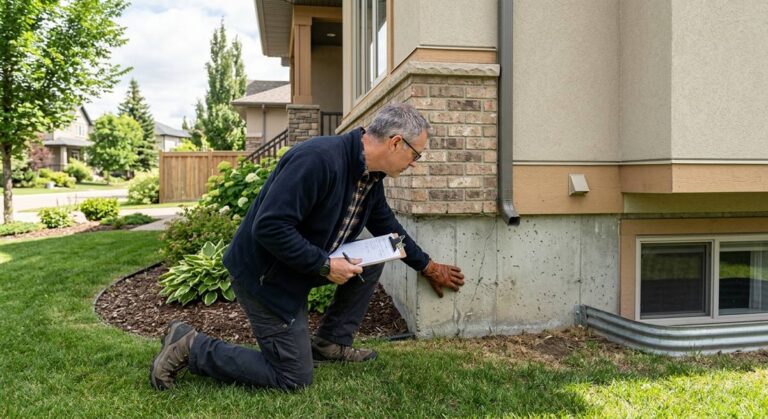
A properly functioning gutter system helps control where rainwater goes before it ever has an opportunity to create problems around your foundation. If you have noticed overflowing gutters, water pooling beside your home, or new signs of moisture around the basement this summer, now is a good time to investigate the cause.
In many cases, correcting a drainage issue early can prevent a much larger foundation problem later. Because when it comes to foundation care, keeping water away from your home is often the most important step of all.
If you are experiencing foundation issues related to excess water around your foundation, give our friendly team a call at 780 760 4900 or fill out our handy contact form.