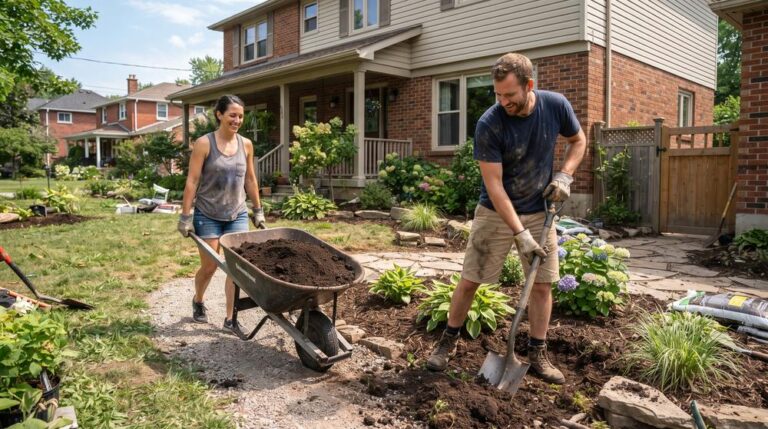
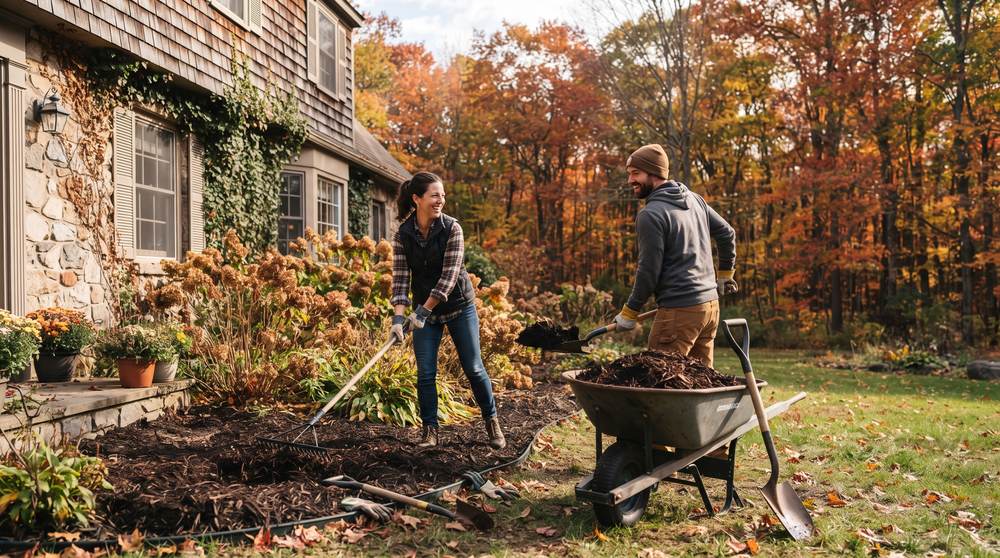
Fall is a good time to mulch your garden. Mulch protects plants and soil through Edmonton’s winter, helps control weeds and can make garden beds look finished. But if your garden runs alongside your house, there is another question worth asking: Could your choice of mulch create problems for your foundation?
The good news is that you don’t need a special “foundation-safe” mulch. From a foundation repair perspective, the more important consideration is how the mulch is installed and whether it interferes with drainage. Water should move away from your foundation, not collect beside it.
With that in mind, here are three organic mulches we would consider practical choices around an Edmonton home.
1. Coarse Wood Chips
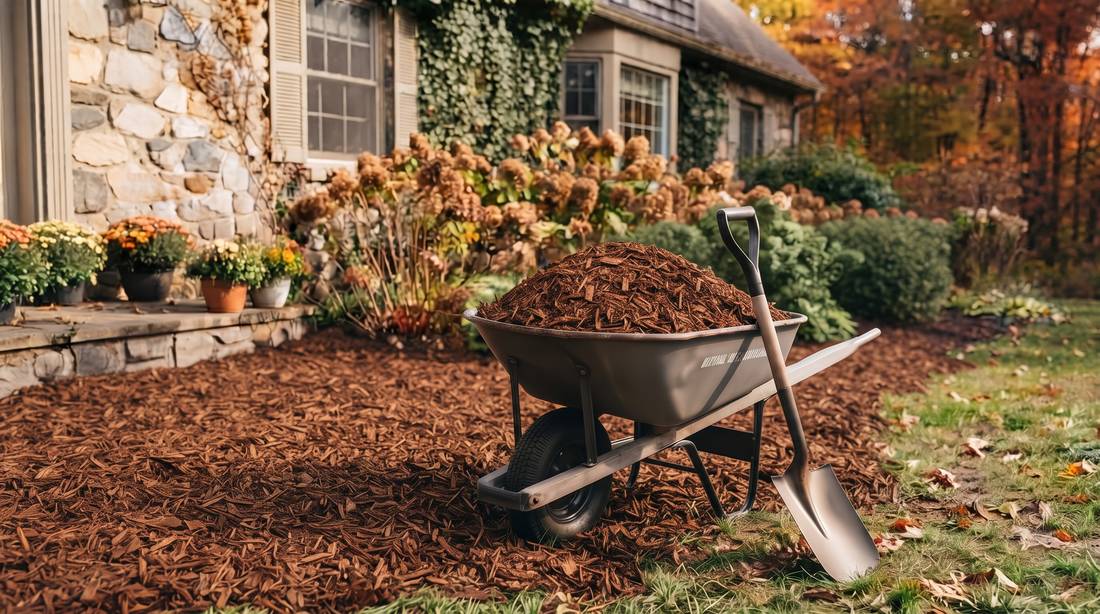
Coarse wood chips are a straightforward choice for many garden beds. They protect the soil, help retain moisture where plants need it and gradually break down. Larger chips are also less likely to compact into a dense layer than very fine organic material.
Pros
- Widely available and relatively inexpensive
- Good protection for soil and plants
- Break down naturally
- Easy to refresh
Cons
- Retain moisture
- Need replenishing as they decompose
- Can move during heavy rain
Foundation tip: Keep the mulch from piling against the foundation and make sure the grade beneath it still directs water away from the house.
2. Bark Mulch
Bark mulch offers similar benefits, with a longer lasting and often more finished appearance. Larger pieces tend to maintain their structure longer than fine mulch, making bark a practical option around shrubs and perennial beds.
Pros
- Attractive and relatively long-lasting
- Helps moderate soil temperature
- Suppresses weeds
- Breaks down gradually
Cons
- Still retains moisture
- Fine bark can compact over time
- Needs occasional refreshing
The important point is that bark mulch should cover the garden, not change the drainage pattern around your house.
3. Shredded Leaves
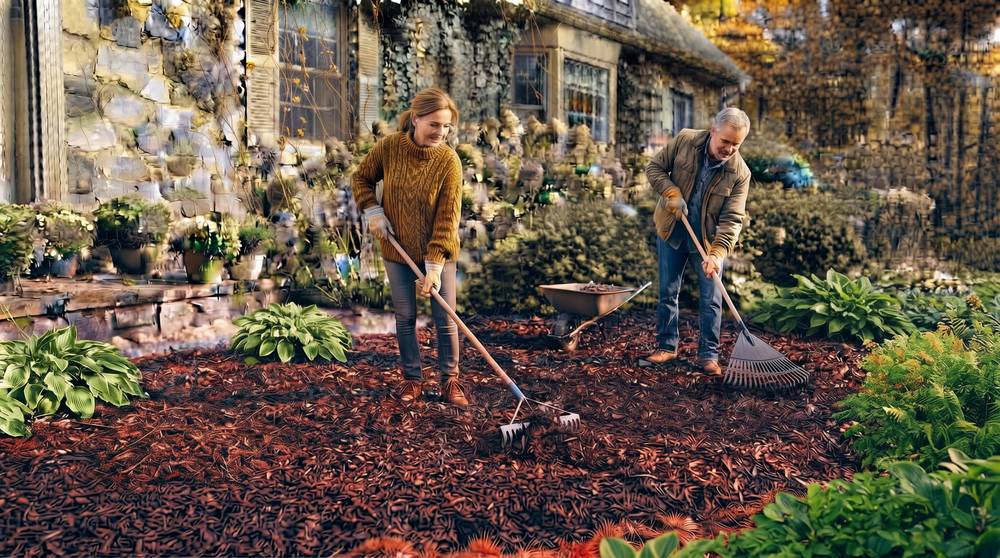
Shredded leaves may be the simplest option of all. If you have mature trees on your property, you already have a free supply. Shredded leaves protect the soil and add organic matter as they decompose.
Pros
- Free if they come from your yard
- Adds organic matter to the soil
- Protects plants through winter
- Easy to replenish
Cons
- Break down relatively quickly
- Can compact if applied too thickly
- May need more frequent replacement
Again, the issue isn’t that leaves are dangerous to foundations. The issue is allowing any mulch to become part of a drainage problem.
What About Rubber Mulch?
You may have seen rubber mulch promoted as a longer-lasting alternative to wood or bark. From a foundation perspective, rubber doesn’t provide a special advantage that makes it preferable around your house. It doesn’t eliminate the need for proper grading or drainage.
There are also horticultural considerations. Unlike organic mulch, rubber doesn’t add organic matter to the soil, and there are ongoing concerns about heat and potential chemical leaching. If you already have rubber mulch, that doesn’t mean your foundation is in danger. The same basic rule applies: look at what the water is doing, not just what the mulch is made of.
What About Decorative Rock?
Rock is another material you may see recommended around foundations. And there is some logic to the idea: it doesn’t decompose and can provide a durable finished surface. But rock isn’t a substitute for proper grading.
The City of Edmonton specifically cautions that decorative materials such as rock, wood chips and bark should not be used to create the underlying grade. The grade needs to be established first, with the decorative material installed afterward. Otherwise, water can collect rather than drain away from the foundation.
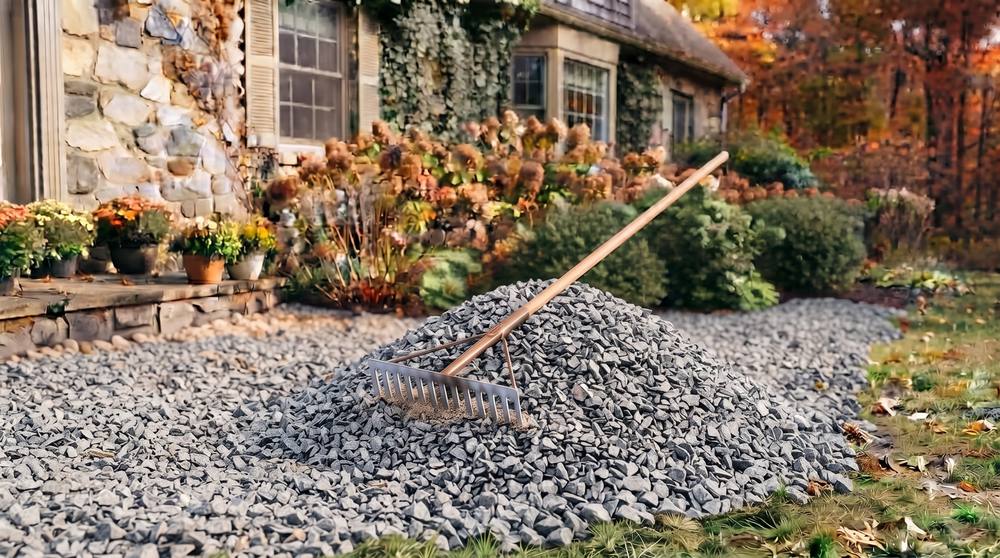
So if you’re considering rock, don’t just ask “Is rock foundation-safe?” Ask: “What’s underneath it, and where will the water go?” If the grading is correct, decorative rock can be a perfectly reasonable landscaping choice. If the grading is wrong, rock can simply hide the problem.
The Most Important Mulch Tip: Don’t Bury Your Drainage
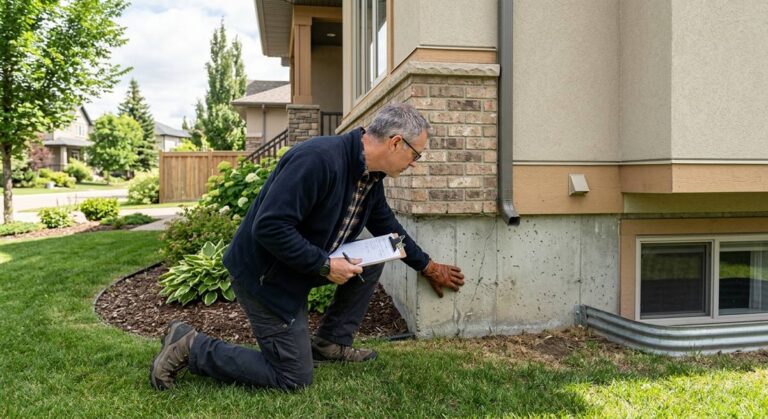
This is where landscaping and foundation protection meet. Mulch should be the finishing layer of your garden, not a way to raise the ground beside your house.
Before adding several inches of material, look at the existing grade. Is water naturally moving away from the foundation? Are you covering the bottom of siding or other exterior materials? Are you creating a low spot beside a window well? Could mulch wash into a drainage path?
Also check the basics:
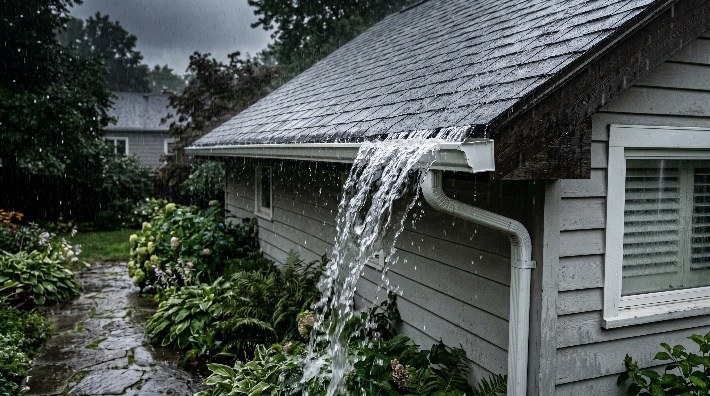
- Keep downspouts directing water away from the foundation.
- Don’t allow mulch to block window wells or drainage paths.
- Don’t build a raised garden bed against the house without considering where the water will go.
- Don’t use mulch to hide a low spot beside the foundation.
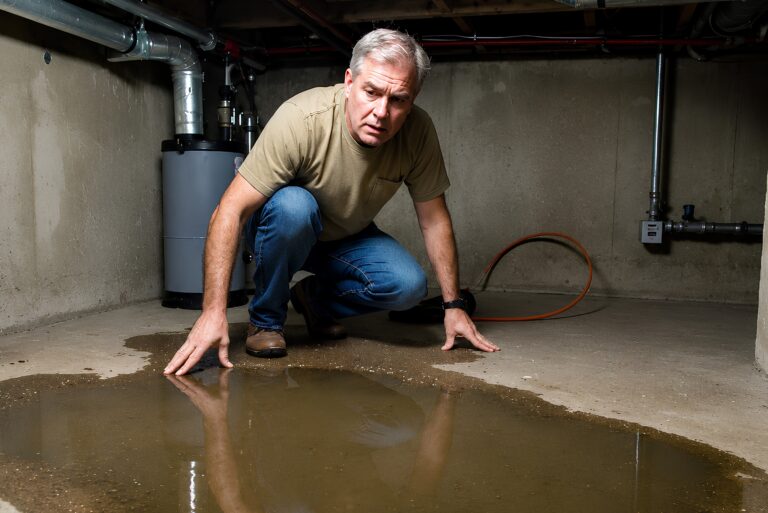
If water is already pooling beside your house, changing the mulch isn’t the answer. Find out why the water is collecting there and address the drainage first.
The Bottom Line
Coarse wood chips, bark mulch and shredded leaves can all be good choices for an Edmonton garden. Decorative rock can work too, and rubber mulch isn’t inherently a foundation problem. But no mulch can make poor drainage safe. Choose the material that works for your garden. Just make sure your foundation isn’t paying the price for it.
If you observe water pooling against your foundation, you may need to have some positive site grading done. Learn more about its importance and what’s involved here. You can also give us a call at 780 760 4900 or fill out our handy contact form to speak to our friendly, knowledgeable staff.